What does the average person know about Uzbekistan? My knowledge was rather limited, I have to admit. A former Soviet republic, capital – Tashkent. One day, I accidentally met a young man in the Quay Street / St Peter’s Square Starbucks in Manchester. He’d just returned from a three-week holiday spent in the country. To say that he was fascinated would have been an understatement. As he flicked between stunning pictures of Samarkand and Bukhara on his laptop, he vowed to return there. Soon, he said.
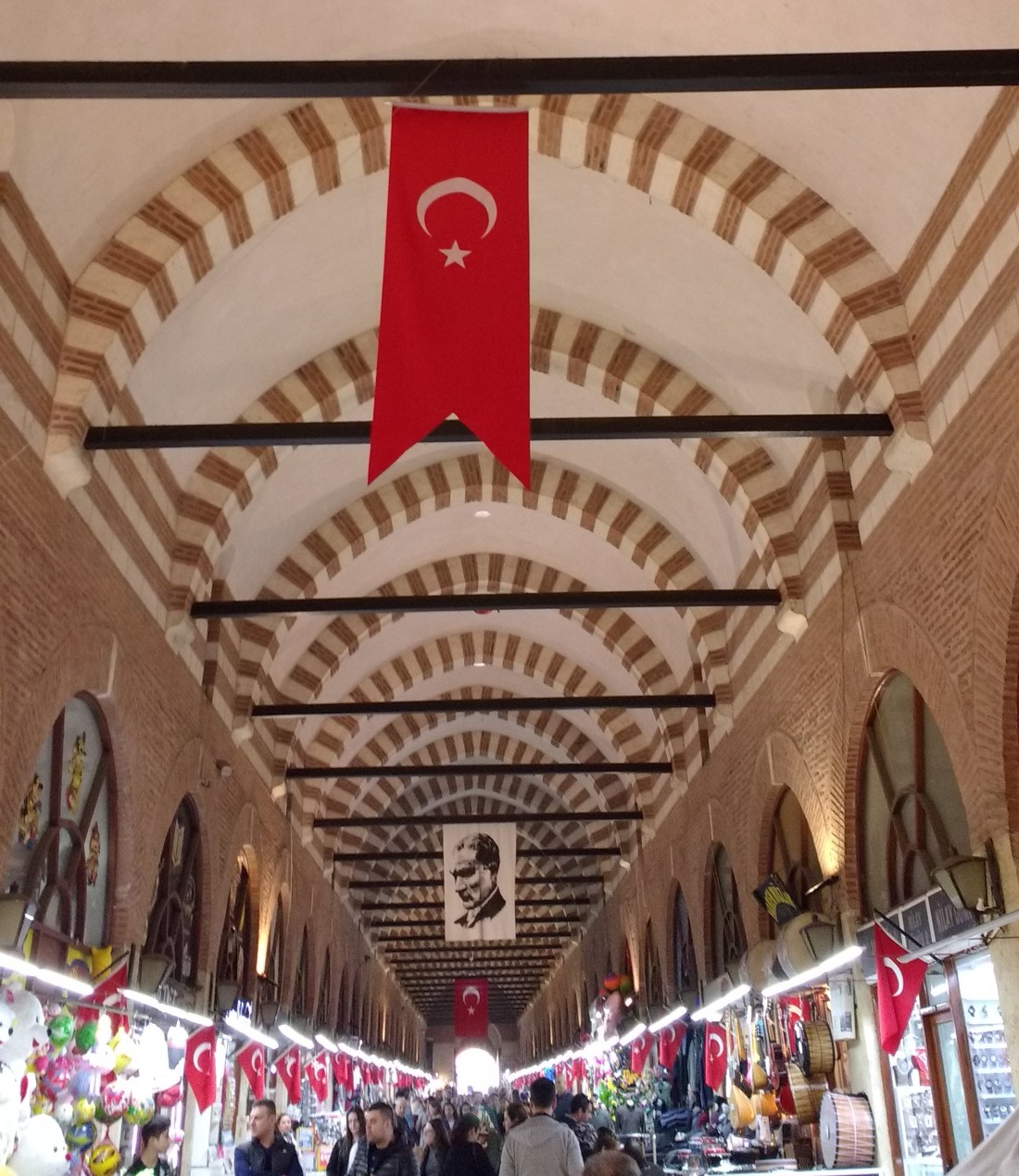
I didn’t think much of this encounter until my arrival in Turkey and my first visit to the Grand Bazar, Kapalı Carşi. Ah, the Grand Bazar! The place has a certain mysticism about it. It’s alluring, exotic. As you wander round the narrow streets, between the rows of traditional Turkish sweets and spices, you will be sure to find all sorts of oriental treasures. A full Ottoman soldier’s armour? Sure. A sultan’s attire? Not a problem. Decorative Turkish glass lamps? Take your pick. Eventually, you will bump into a shop selling fabrics. And you’ll be instantly transprted to another universe – just as I was.

I had never seen such a variety of fabrics, in such vivid colours and patterns. I got talking to the friendly shop owner, Emin, who luckily spoke good English. He invited me to sit down and sent one of his helpers for Turkish tea. The fabulous fabrics I was looking at were samples of ikat – a traditional Uzbek fabric, he explained. Ikat is handwoven from silk, using the tie-dye technique. In this technique, the strands of silk are tied together and dyed; the pattern of the fabric is formed in the process of weaving. It was a difficult, time-consuming process, he added; it could take more than a week to weave one meter of the fabric.
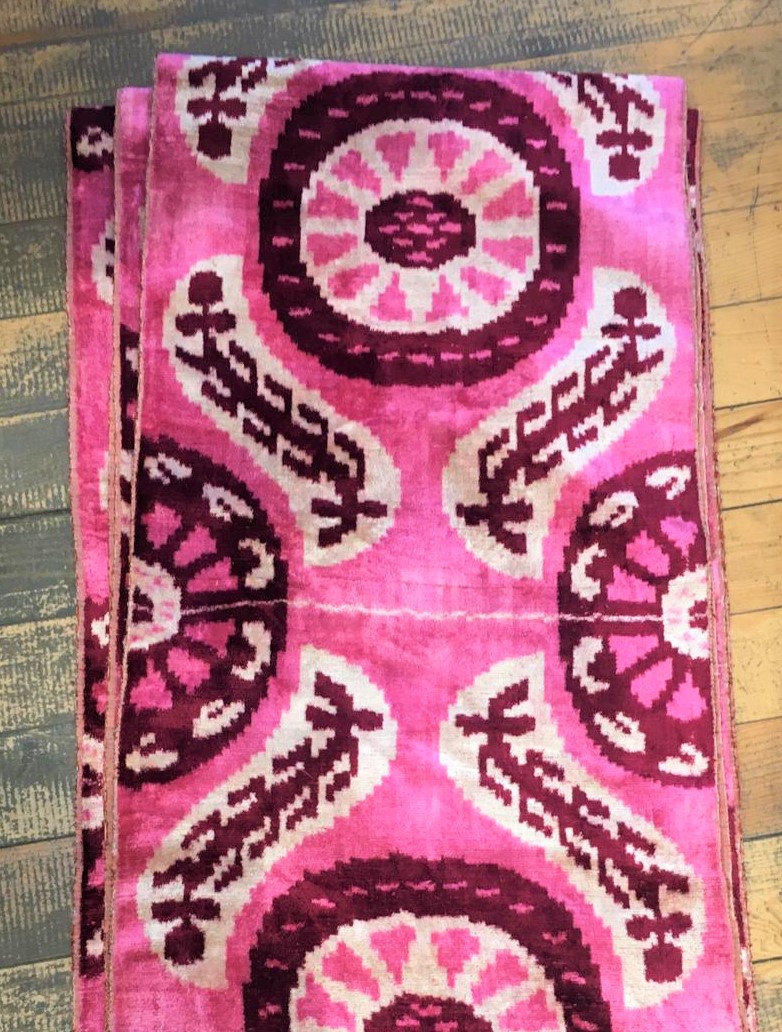
Uzbek silk velvet ikat
I looked around the shop and saw many splending items made from ikat. Elegant dresses, shoes and accessories – belts, clutch bags. Not your average [insert a clothing chain brand name here], but unique items that would attract attention even in [insert busy cosmpolitan British / American city name here]. I learnt that there are two types of ikat – silk and silk velvet. It wasn’t exactly easy to comprehend, but once I was shown a sample of both it was obvious: one was smooth, the other was … well, velvety.
Emin kept chatting. Ikat fabric, he told me, was also a hit with interior desiners. Apparently, they use it to for lamp shades, upholstery, soft furnishings like pillows, table runners.
I must have spent hours in the shop, trying to pick a small souvenir out of – what felt like – thousands of items. I had no idea that things like that even existed. I thought of the many Uzbek immigrants who come to Turkey to make a living and do the most difficult, ungrateful manual jobs one can possibly imagine. Now, in my mind’s eye, I saw them in their colourful robes, chatting away with their relatives; at their handlooms, working away, trying to preserve a wonderful tradition.
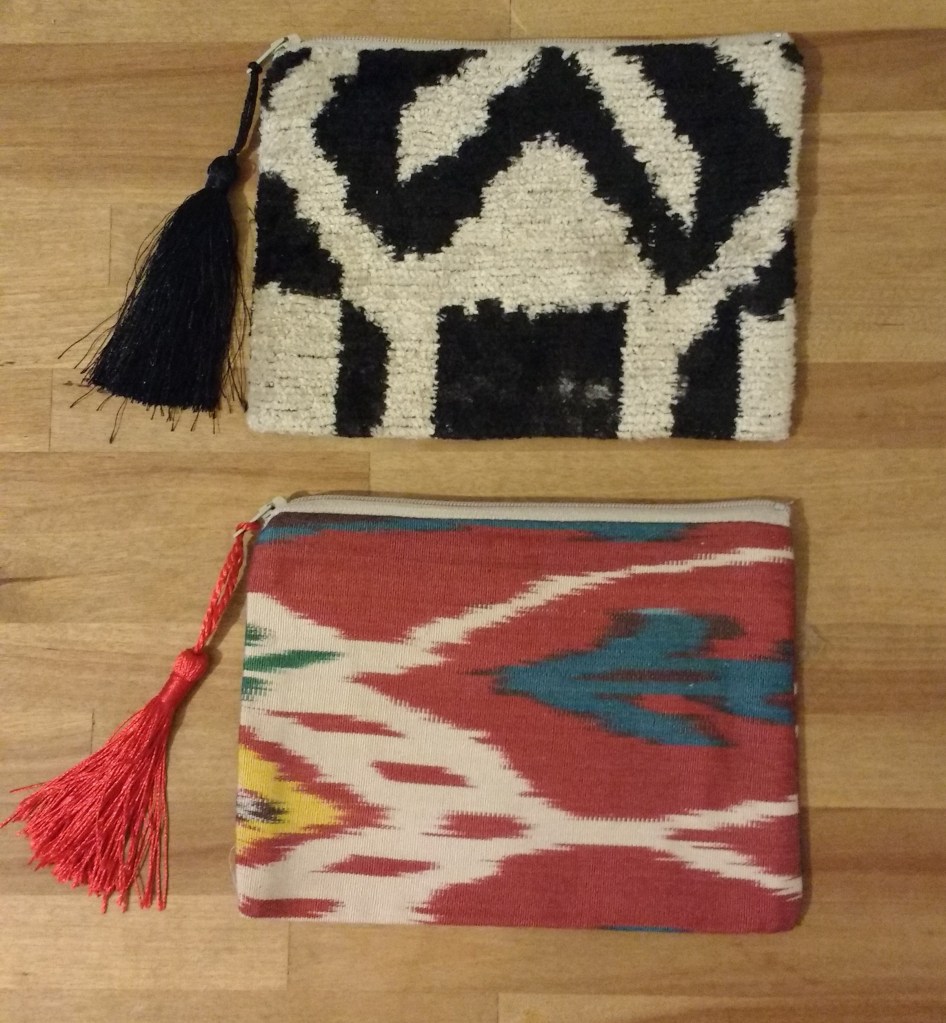
Eventually, I picked a couple of small zipper pouches. Perhaps they’ll help me get more organised. (Mini digression – are organised people born that way? The monumental efforts I put into this being organised just never seem to work..)
Emin asked me for a small favour. In addition to his physical shop, he runs an online shop with his partner. He asked if I could spread the word. Some people, he said, may be a little sceptical about buying from Turkey. The shop name is the rather poetic Timeless Trades. It is hosted by the popular e-commerce platform Etsy. It has many good reviews and it will give you an idea of what I saw in the Grand Bazar. Here is the link. I think it’s well worth having a look at.
I paid for my purchase, thanked Emin for the chat and said goodbye. As I was leaving, I cast my mind back to that chance encounter in the Manchester Starbucks. Uzbekistan is just around the corner from Turkey. Who knows, maybe one day I will get the chance to see the wonders of Bukhara and Samarkand – this time, not on a digital image…


